
Summary
Knowing how to promote blog content effectively requires more than publishing an article and sharing it on social media. A structured distribution strategy combines search optimisation, email marketing, social media, partnerships and content repurposing to reach relevant audiences. This 12-step checklist explains how to prepare, promote, track and redistribute your articles to build long-term visibility, engagement and business enquiries.
Key Takeaways
- Strong blog results are rare: Orbit Media’s 2026 survey found only 13.9% of marketers reported strong results, with 18% unsure if their blog worked at all
- Effective promotion treats distribution as a repeatable process covering owned, earned, shared, and paid channels, rather than a single social post after publishing
- Original research and influencer collaboration are both linked to notably stronger reported results, according to Orbit Media’s 2026 analysis
- Technical readiness, consistent campaign tracking, and platform-specific adaptation each play a distinct role in whether an article gets found and read
- West Pro Media Services Ltd’s content creation approach treats promotion planning as part of building an article worth distributing in the first place
Publishing a blog post and hoping readers find it rarely works anymore. Search results now share space with AI-generated summaries, social feeds reward genuine conversation over repeated links, and audiences scroll past anything that feels like a broadcast. Getting an article read, shared, and acted upon takes a deliberate plan that starts before the post goes live and continues well after it does.
Why 13.9% See Strong Blog Results
Orbit Media’s 2026 survey of over a thousand content marketers found that only 13.9% of respondents described their blogging results as strong. Almost as striking, 18% said they genuinely did not know whether their blog was delivering anything useful at all. Those two figures together tell an important story: publishing content is common, but most businesses either are not converting it into outcomes or cannot tell whether they are.
The same research links specific practices to markedly better outcomes. Influencer collaboration was associated with 2.6 times the benchmark rate of strong results, while publishing original research made respondents roughly 50% more likely to report strong outcomes. Neither finding proves that any one tactic guarantees success on its own, since the data describes an association rather than a controlled experiment. What it does suggest is that effort spent on substance and relationships tends to outperform effort spent simply pushing out more content.
This is where a structured distribution checklist earns its keep. Rather than treating promotion as an afterthought, content creation services built around distribution from the outset give an article a far better chance of reaching the people it was written for. The twelve steps that follow turn that idea into a workable process businesses can repeat with every new piece of content.
Promotion vs. Distribution: Key Definitions
Clear language matters here, because the terms get used interchangeably when they describe different activities. Content promotion refers to the specific activities intended to bring attention to an article, such as newsletter announcements, social posts, outreach emails, and paid advertising. Content distribution is the broader term covering the entire process of delivering content to a chosen audience through owned, earned, shared, and paid channels.
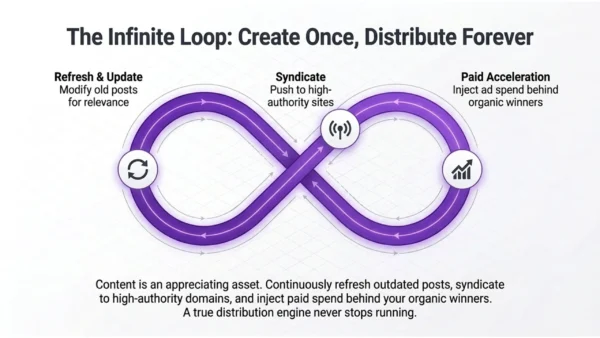
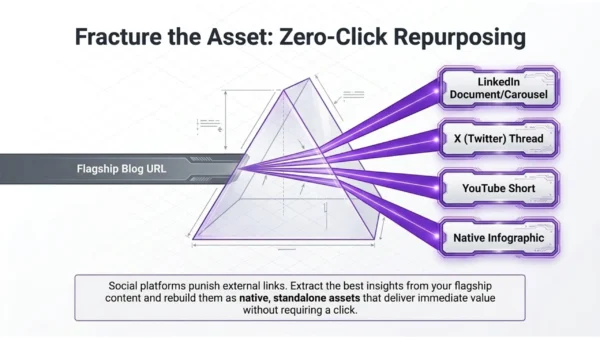
Two related terms also deserve a mention before the checklist begins. Content repurposing means converting an article’s core ideas into another format, such as a short video, a carousel post, or a webinar segment, so the same insight reaches people in formats they actually prefer. Content syndication, by contrast, means authorised republication of an article, or an adapted version of it, on another website or publication entirely.
These distinctions carry real consequences. Sharing a link, publishing a native summary, and republishing a full article in another place create three very different reader experiences, and each carries different implications for search visibility. A single organising question helps keep every distribution decision grounded: does this activity have a defined audience, a clear reason to exist, a useful format, and a measurable next step?
Four Steps Before Launch
Before a single social post goes out, four preparatory steps set the foundation for everything that follows. Skipping them tends to produce the scattergun promotion that leaves marketers unsure, eighteen months later, whether any of it worked.
Step 1: Define Audience and Outcome
Every article needs a clear answer to who it is for and what it should achieve before any promotion begins. That means identifying the reader’s problem or decision point, deciding whether the article’s job is awareness, education, subscriber growth, enquiries, or direct sales support, and choosing the next action that fits that purpose.
A business writing about planning a commercial refurbishment, for example, might aim the article at owners weighing up a project, with the intended next step being a checklist download or a consultation request. Success should be measured against that outcome rather than page views alone. Orbit Media’s latest report recommends tracking qualified leads, deals, and revenue rather than stopping at traffic numbers.
Step 2: Select a Few Relevant Channels
Choosing channels works best as a decision made before the article is even finished, not an afterthought once it has gone live. A practical way to approach this is by channel type:
- Owned channels include the company website, newsletter, and existing email sequences, and the key question is whether an audience interested in the topic already exists there.
- Shared channels cover social posts, professional groups, and community discussions, where the test is whether something genuinely useful can be contributed in that platform’s native style.
- Earned channels include expert sharing, publisher coverage, and partner newsletters, where the question becomes what makes the article valuable to someone else’s audience.
- Paid channels cover social advertising and newsletter sponsorships, which only make sense once a worthwhile outcome has been defined to justify the spend.
Prioritising fit over sheer channel count tends to produce better results than spreading effort thinly across every platform available.
Step 3: Make the Article Worth Sharing
Distribution cannot rescue an article with nothing distinctive to say. Before promotion begins, it is worth checking the piece for a genuine reason to read, save, share, or cite it: first-hand experience, original findings, meaningful expert input, a useful diagram or checklist, clear answers to the reader’s actual questions, and properly attributed evidence. Articles with original research, visual elements, and genuine collaboration consistently perform better in Orbit Media’s analysis, which reinforces the point that no amount of clever posting compensates for a thin or generic piece.
Step 4: Check Technical Readiness
A technically broken page undermines every promotion effort that follows it. Before directing readers or search engines toward the article, confirm the page is publicly accessible and mobile-friendly, check for accidental “noindex” directives, and make sure crawling has not been blocked by robots.txt or hosting settings. Important information should sit in readable text rather than locked inside images, and relevant internal links should point toward the new piece. Google lists crawling access, internal discoverability, and accessible textual content among its recommended practices for visibility in AI-powered search features, though meeting these requirements does not guarantee inclusion.
Launching Across Owned and Social Channels
With the groundwork done, attention turns to getting the article in front of people through channels already under direct control.
Step 5: Build a Promotion Pack
Sending every channel the same headline and link wastes the opportunity each platform offers. A useful promotion pack might include a newsletter introduction, several social posts written from different angles, one visual summary or carousel, a short video explanation, an expert quote graphic where permission allows, and a concise pitch for partners or publishers. Different angles could focus on the central problem, a surprising finding, a practical step, a common misconception, or a real example, giving each channel something distinct to work with.
Step 6: Set Up Campaign Tracking
Consistent tracking turns promotion from guesswork into something measurable. Setting up UTM parameters before launch means every external link can be traced back to its source, medium, campaign, and specific content variation. A typical set-up might tag a LinkedIn post with its own source and campaign labels, distinct from a newsletter link promoting the same article. These tags belong on external promotional links only; adding them to internal website navigation can distort analytics and should be avoided.
Step 7: Launch Through Owned Channels
Owned channels offer a route to readers that does not depend on search rankings or algorithm changes. Practical launch actions include adding contextual links from relevant existing articles, including the piece in the next scheduled newsletter, adding it to a relevant resource page, and briefing customer-facing staff on when it might be useful to share. Internal links also help search engines find the new page, so this step supports both audience reach and technical visibility at once.
Step 8: Adapt Posts for Each Platform
Different networks reward different kinds of content, and a single repurposed post rarely performs equally well everywhere. LinkedIn tends to favour informative, professionally relevant insights, while a visual-first platform responds better to striking imagery or short video. A useful structure for any platform post states the problem or finding, explains one meaningful point, adds an example or practical step, and links to the full article only when readers genuinely need the extra depth. LinkedIn has stated it is reducing the reach of repetitive, low-substance posting and automated engagement, which makes a thoughtful, platform-specific approach more valuable than ever.
Earning Reach Beyond Your Own Channels
Owned and social channels only go so far. The next four steps extend reach into territory not directly controlled, where collaboration and genuine usefulness start to matter most.
Step 9: Notify Contributors and Partners
Anyone who contributed expertise to the article deserves to know it has gone live, along with a thank-you, a relevant excerpt or visual they can share, and the option to decline. Approaching other potential partners works best with a specific benefit in mind rather than a generic request, such as pointing out that their audience regularly asks about the exact issue the article addresses. This relationship-led approach reflects the kind of collaboration linked to stronger results in Orbit Media’s research, distinct from mass outreach to anyone labelled an influencer.
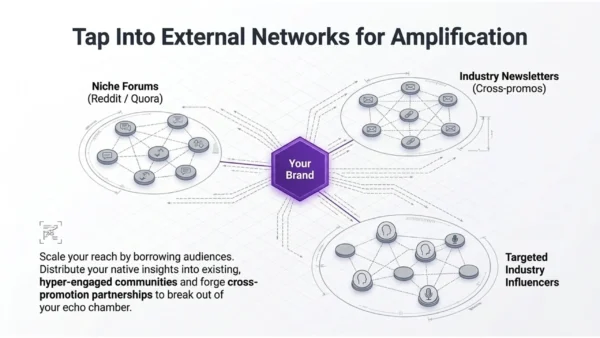
Step 10: Add Value in Communities
Online communities respond to genuine helpfulness far better than to dropped links. A sound approach involves reading a community’s rules first, finding a discussion the article genuinely helps answer, providing a useful response within that discussion, disclosing any connection to the resource being shared, and continuing to participate afterwards rather than disappearing once the link is posted. Search engines treat optimised links placed in forum comments as a form of link spam, so this distinction between genuine participation and manipulation matters for more than just reputation.
Step 11: Weigh Earned, Paid and Syndicated Reach
The right next move depends on what kind of article is being promoted. Original research tends to suit outreach to journalists and specialist publications. Practical guidance often works well shared with relevant associations and partner communities. Expert-led content benefits from coordinated contributor distribution, while a commercially useful evergreen article might justify a controlled paid campaign with a clearly defined budget and acceptable outcome agreed in advance. Syndication deserves particular care: republishing a full article elsewhere can create competing versions of the same content, so agreeing whether the syndicated copy should be excluded from search indexing helps avoid diluting the original’s visibility.
Step 12: Review, Improve and Redistribute
Promotion does not end once the initial wave of activity settles down. An early review can catch broken links or tracking errors, a campaign review reveals which channels and formats produced genuine engagement, and a longer-term review considers search visibility, earned links, and continuing usefulness. From there, updating unclear sections, adding answers to questions readers keep asking, refreshing outdated evidence, and reusing the strongest-performing angle in a new format all give an article a longer working life. Consistent measurement is repeatedly linked to stronger reported performance in Orbit Media’s survey, which makes this closing step as important as the launch itself.
What Counts as Ranking Signals
Distribution and ranking are connected but separate systems, and it helps to treat them that way rather than assuming more sharing automatically means better rankings.
Google Search Fundamentals
Google’s documented ranking systems focus on relevance, originality, reliability, and links, alongside freshness for queries where up-to-date information genuinely matters. Accessible, well-linked, crawlable pages support discovery, but none of these factors are guaranteed outcomes of promotion activity alone. The number of platforms an article appears on is not itself a confirmed ranking signal; the underlying systems concern usefulness, trustworthiness, and genuine relevance to the search query.
LinkedIn’s Feed Priorities
LinkedIn has described its feed ranking as weighing profile information, the topic and meaning of a post, and a person’s past interaction history, including what they read, like, comment on, and scroll past. The practical takeaway is straightforward: posts aimed at a recognisable professional audience with genuine insight tend to perform better than generic, repeated promotional copy. LinkedIn has also said it is actively reducing the reach of engagement pods and automated comments, reinforcing that authentic conversation beats manufactured activity.
AI Overviews and Discoverability
Google has stated that visibility within its AI-powered search features still depends on the same established SEO fundamentals used for traditional search results, rather than a separate set of special requirements. Pages need to be indexed and eligible to appear with a standard search snippet before they can be considered for an AI-generated summary. Pew Research Center’s March 2025 study found that traditional search result links received clicks on 8% of Google visits where an AI summary appeared, compared with 15% of visits without one. That gap is a useful reminder that being cited within an AI summary and earning an actual visit to the article are two different outcomes, which is precisely why distribution to owned and earned channels remains worthwhile even as search behaviour shifts.
Checklist Beats Publish-and-Hope
Treating blog promotion as a twelve-step distribution process, rather than a single social post after publishing, changes the odds considerably. Each step plays a distinct role: preparing the article and the page before launch, reaching audiences through the right channels, adapting ideas into formats people actually want to consume, and then measuring whether any of it moved the business forward.
None of this demands a huge team or an enormous budget. It demands a habit of working through the same deliberate questions every time a new article goes live, rather than treating distribution as an improvised afterthought. For a practical starting point, consider building a simple blog content distribution checklist into the next publishing schedule and tracking which steps actually move the needle.
| Topic / Area | Key Finding | Business Impact | Why It Matters |
|---|---|---|---|
| Blogging performance | Only 13.9% reported strong results in Orbit’s 2026 survey | Publishing alone offers no assurance of commercial returns | Define success through qualified enquiries, leads and sales |
| AI search behaviour | Traditional-result clicks: 8% with AI summaries; 15% without | Search visibility does not necessarily translate into website visits | Build email, partner and community distribution alongside search |
| Campaign measurement | UTM parameters identify traffic from individual promotional campaigns | Enables clearer comparison of channel and campaign performance | Combine source tracking with enquiry and conversion measurement |
Sources
Pew Research Center — Google Users Are Less Likely to Click When an AI Summary Appears
Analytics Mania — A Guide to UTM Parameters in Google Analytics 4
Frequently Asked Questions
How can I promote a blog post for free without a large social media following?
Start with people already connected to your business: email subscribers, customers and professional contacts. Add relevant internal links, offer the article to a partner newsletter, and answer related community questions. These approaches prioritise audience relevance rather than follower numbers or advertising spend.
How often should I share the same blog post without annoying my audience?
Avoid repeatedly posting the same headline and link. Share different takeaways, examples or practical tips, spacing them among other useful content. Let audience response guide frequency, and revisit the article when an update or relevant discussion gives readers a fresh reason to engage.
Can I get my blog content featured in Google AI Overviews?
There is no guaranteed placement or special AI markup that secures inclusion. Your page must be indexed and eligible for a search snippet. Focus on accessible content, clear explanations and distinctive expertise, while maintaining the SEO fundamentals that support visibility in Google Search.
Which blog promotion channels actually generate leads rather than just traffic?
Treat leads, not clicks, as the deciding metric. Tag external promotional links with consistent UTM parameters, then track meaningful actions such as enquiries or consultation requests. Compare results by source and campaign to identify channels that attract potential customers rather than merely increasing visitor numbers.
Should I publish my full blog post on LinkedIn or share a shorter version?
Use a shorter, self-contained version when you want readers to visit the original article for greater depth. A fuller native post can suit an on-platform discussion. In either case, adapt the opening, examples and takeaway rather than automatically repeating the website copy.
