
Summary
Content Marketing Agency support becomes worthwhile when your Bury business generates traffic but not enquiries, struggles to appear in local search, publishes content without a strategy, leaves customer questions unanswered, or cannot measure marketing results. Recognising these five warning signs helps you decide when expert guidance can turn disconnected content into a structured system that builds visibility, trust and consistent enquiries.
Key Takeaways
- Five clear warning signs suggest a Bury business needs help from a content marketing agency: patchy leads, poor local search visibility, unanswered buyer questions, sporadic publishing, and no way to measure results
- Google ranks local businesses on relevance, distance and prominence, so a complete Google Business Profile and genuine reviews matter more than posting frequency
- Ofcom’s 2025 Online Nation report found that AI-powered search tools now shape a growing share of UK searches, meaning businesses need structured, verifiable information to stay visible beyond traditional Google results
- Content Marketing Institute’s 2025 enterprise research found that only 28% of marketers rate their content strategy as highly effective, showing that having a plan and executing it well are different challenges
- A documented content strategy connecting research, website pages, local SEO and measurement outperforms random, reactive posting
Bury business owners often sense something isn’t working with their marketing long before they can name the problem. Enquiries feel patchy, competitors seem to appear everywhere online, and the website sits there quietly without doing much. These moments are worth paying attention to, because they usually point to specific, fixable gaps rather than a need to simply “post more.”
When More Posting Isn’t the Answer
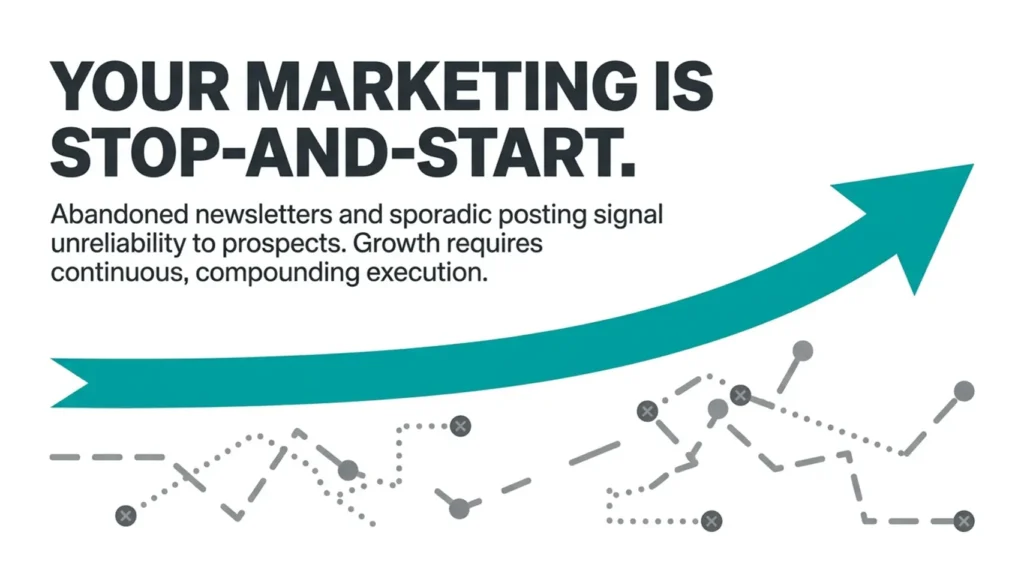
A common reaction to slow leads is to publish more often: another social update, another blog nobody asked for. Volume rarely fixes a strategy problem. West Pro Media Services Ltd holds that content marketing works best as a connected system linking customer research, website pages, local search optimisation, case studies and measurement, rather than a stream of disconnected posts.
Without that connection, content becomes background noise. Business owners in Bury need something that actively supports enquiries rather than something that keeps a feed looking busy.
Traffic Arrives, Enquiries Don’t
A business might see decent numbers landing on its website from Google or social media, yet the phone stays quiet and the contact form barely gets used. This gap usually comes down to mismatched content: visitors arrive expecting an answer to a specific question, and instead find a page that talks about the company rather than their problem.
Different visitors need different things depending on where they are in their decision. Someone just starting to research a service wants a plain explanation. Someone closer to buying wants proof: a case study, a price guide, honest answers to common objections. When a website only offers generic service pages, it misses most of these moments, and enquiries stay lower than the traffic numbers suggest they should be.
Weak Visibility in Local Search
Some Bury businesses barely show up when potential customers search for their services nearby. This is rarely down to bad luck. Local search results are shaped by a specific set of factors.
Relevance, Distance and Prominence Explained
Google states that local search results are principally shaped by relevance, distance and prominence. Relevance depends on how clearly a Google Business Profile and website explain what a business does. Distance reflects how close a searcher is, which no amount of content can change. Prominence comes from genuine trust signals: reviews, mentions, links and an established online reputation.
Google advises businesses to keep their Business Profile complete and accurate, maintain up-to-date hours, respond to reviews, and add photos or videos. None of this guarantees a top spot, but skipping it makes visibility considerably harder to achieve.
Preparing for AI-Powered Search Results
Search behaviour is shifting. Ofcom’s 2025 Online Nation report found that around 30% of UK keyword searches now return AI-supported responses, and 53% of UK adults often encounter AI summaries when they search. These systems tend to favour businesses with clear, structured information: consistent details across the website and directories, FAQ sections, and evidence that can be easily verified. Businesses that keep their online information accurate and well-organised are simply easier for both people and AI tools to recommend.
Content That’s Reactive, Not Strategic
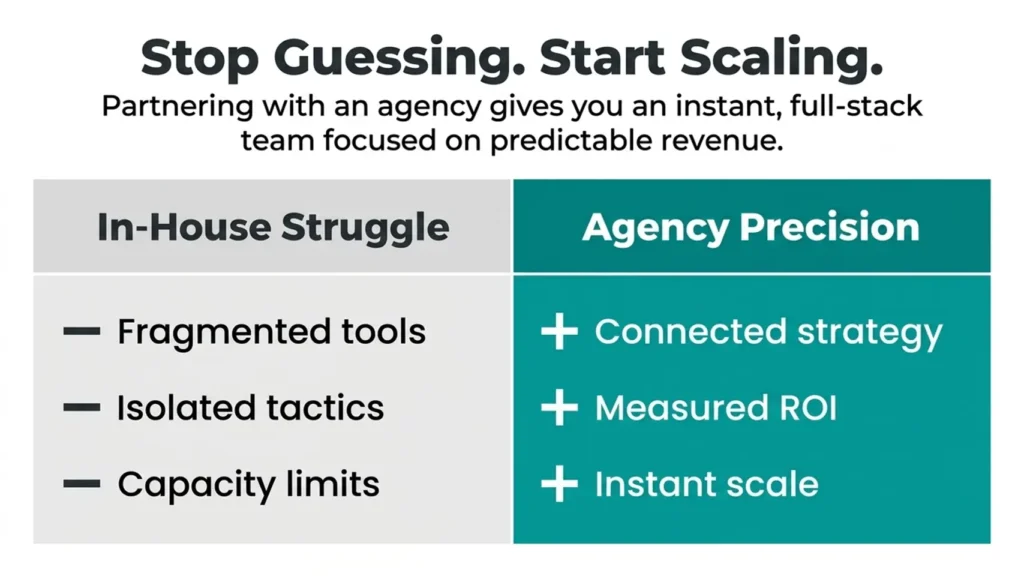
A blog post here, a LinkedIn update there, usually squeezed in whenever someone finds a spare hour. This pattern is familiar to many small teams, and it tends to produce content with no clear thread connecting it. Topics get chosen on a whim rather than from customer questions, sales conversations or search data.
The knock-on effect is that useful expertise sitting inside the business, such as insights from a founder or an experienced team member, never gets turned into something customers can actually find. Reactive content struggles to build the kind of topical authority that search engines and AI tools reward over time.
Competitors Answer Buyers First
Buyers usually research before they ever pick up the phone. If competitors have detailed guides, comparison pages, case studies and answers to common objections, they become the familiar option by the time a decision is made, even if their service isn’t actually better.
Google’s own guidance backs this up: it prioritises helpful, reliable information created for people, favouring pages that show real experience, clear sourcing and genuine expertise over content written purely to chase rankings. A Bury business that answers buyer questions honestly and specifically, using its own project examples and direct experience, has a real chance to become the trusted choice rather than the overlooked one.
No Way to Prove Content’s Worth
A frequent complaint from business owners is not knowing what their marketing actually achieves. Reports might show follower counts or page views, but nothing that connects to actual enquiries or sales.
This matters because content without measurement becomes a discretionary cost rather than something the business can plan around. Content Marketing Institute’s 2025 enterprise research found that only 28% of enterprise marketers rated their content strategy as very or extremely effective, a reminder that having a strategy and running it well are two separate things. Setting clear, agreed measures from the start, whether that’s calls, quote requests or tracked enquiries, turns content from a guessing game into something that can be reviewed and improved.
Content Strategy Beats Random Posting
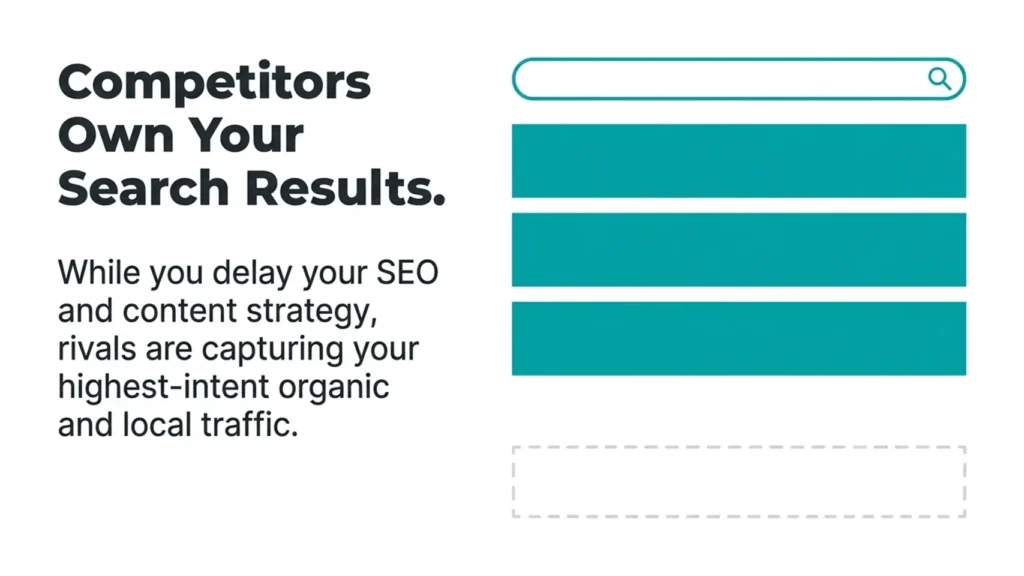
Each of these signs points to the same underlying issue: content that isn’t tied to a plan struggles to deliver results, no matter how often it’s published. A workable strategy connects what customers are actually asking, what the website says, how the business appears in local search, and how results get tracked over time.
For Bury business owners noticing any of these patterns, a useful first step is checking existing website pages against real customer questions. For a more structured approach, content marketing services built around strategy and measurement can help turn scattered activity into something that consistently supports growth.
| Topic / Area | Key Finding | Business Impact | Why It Matters |
|---|---|---|---|
| Local search visibility | Google prioritises relevance, distance and prominence | Strong profiles improve local discovery potential | Complete, accurate business information supports relevant searches |
| Google Business Profile | Accurate details increase local-search eligibility | Fewer missed calls, visits and enquiries | Hours, services, reviews and photos influence trust |
| AI-supported search | Around 30% of queries show AI overviews | Visibility now extends beyond blue-link rankings | Clear, verifiable information is easier to surface |
| Content strategy effectiveness | Only 28% rate strategy highly effective | Random publishing wastes limited marketing resource | Strategy links audience needs, channels and commercial outcomes |
| Measurement and reporting | Reporting is a key effectiveness driver | Enables budget decisions based on enquiries | Track calls, forms, quotes and qualified leads |
Sources
Frequently Asked Questions
How do I know whether my website traffic is turning into enough enquiries?
Look beyond visits alone. Track contact-form submissions, phone calls, quote requests, booked appointments and the pages people viewed before getting in touch. If relevant traffic arrives but few visitors take these actions, your content, calls to action or service pages may not match buyer intent.
Can a content marketing agency help my Bury business rank higher on Google Maps?
An agency cannot guarantee a particular Maps position, because location and competition affect results. However, it can improve factors within your control: accurate Business Profile information, relevant service pages, review processes, local citations and trustworthy content. Google says local rankings primarily reflect relevance, distance and prominence.
What type of content generates enquiries for a local business?
The most useful content answers questions people ask shortly before choosing a supplier. This can include service explainers, pricing or cost guidance, local-area pages, case studies, comparison articles, FAQs and objection-handling pages. The goal is to help a prospective customer make a confident next-step decision, not simply attract broad traffic.
Do small businesses need content for AI search results as well as Google?
Yes. AI-supported answers increasingly appear within ordinary search journeys: Ofcom reported that roughly 30% of UK keyword searches generated AI-supported overviews, while 53% of UK people said they often encountered AI summaries. Clear service information, consistent business details, evidence and well-written FAQs make a business easier to understand and verify.
How long does content marketing take to produce measurable results?
Some improvements, such as clearer conversion pages or better tracking, can be seen relatively quickly. Search visibility, local authority and consistent enquiry growth usually take months because content needs to be published, indexed, trusted and refined. Agreeing measures such as qualified enquiries, calls and quote requests helps show whether progress is commercially meaningful. A documented strategy matters: only 28% of enterprise marketers rated their content strategy very or extremely effective in CMI’s 2025 research.
