
Summary
Free content promotion can generate immediate unpaid visits through email, social platforms, communities and referrals, while relevant mentions and links may support longer-term search discovery. The most effective approach is not posting everywhere. Make the resource genuinely useful, promote it to an audience with a clear reason to click, adapt the message to each channel and measure visits, engagement, enquiries and search performance separately.
Key Takeaways
- Free promotion removes advertising spend, not the cost of expertise, production, outreach or time.
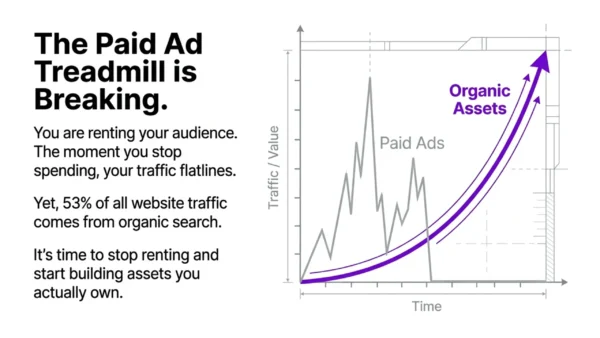
- Email, social, community and referral visits are unpaid traffic, but they are not the same as organic search.
- Original research, useful tools, worked examples and expert contributions give people a reason to recommend content.
- Community participation and publisher outreach work best when the contribution is valuable without requiring a click.
- Track distribution results and search results separately so you do not confuse visibility with traffic or assume correlation proves causation.
Make the Resource Worth Promoting Before Distributing It
The most reliable free promotion methods start with the content itself. A generic article gives people little reason to click, share, cite or return to it. A useful resource answers a specific customer question, adds practical experience and contains something distinctive, such as original analysis, a worked example, a comparison, a template or a clearly explained process.
Google’s guidance emphasises original, helpful content created for people rather than pages produced mainly to attract search traffic. It also asks whether a reader would find the information valuable enough to bookmark or recommend. Promotion cannot compensate for a resource that simply rewrites what is already available.
Is free content promotion really free?
“Free” normally means that you are not paying for advertising or paid placement. It does not mean that promotion requires no investment. Someone still has to research the topic, create the content, build relationships, answer community questions, adapt posts for different platforms and monitor the results.
Record the time involved as well as any cash cost. A manual outreach campaign may be free in media spend but expensive in staff time. This matters when deciding whether a method is genuinely worthwhile for a small business.
What counts as organic traffic?
Unpaid traffic comes from several different sources. Google Analytics separates Organic Search, Organic Social, Email and Referral traffic. A visit from a LinkedIn post is unpaid, but it is Organic Social rather than Organic Search. A newsletter click is Email traffic, and a link on another website is a Referral visit.
Promotion can produce two different outcomes. It can send people directly to the article now, or it can help the article become known to people who later refer to it, link to it or search for the business. The second outcome may support discovery over time, but sharing a page does not automatically improve its rankings.
Before promoting heavily, check that the page can be accessed, crawled and indexed. Technical eligibility is necessary but does not guarantee that Google will index or serve a page. Make sure the content is not blocked, has sensible internal links and provides a usable experience on mobile and desktop.
Use Assets and Audiences You Already Control
The quickest opportunities are often on your own website and in audiences that have already chosen to hear from you.
Add contextual internal links
Find existing pages that discuss a closely related subject and add a natural link to the new resource where it genuinely helps the reader. Descriptive anchor text is more useful than vague phrases such as “click here”. The new article should also link back to relevant supporting pages.
For example, a guide about promoting content could be linked from existing articles about blogging, content planning and measuring marketing results. Linking it from every page would be less helpful and could make the site harder to navigate.
Internal links help people and search systems discover related content. They do not guarantee indexing, rankings or traffic, so measure whether visitors actually reach and engage with the new page.
Refresh an existing article and promote the improvement
An established article may have more visibility and existing links than a new one. Updating it can therefore be a more efficient promotion opportunity than starting from zero.
Improve the substance rather than changing the date. Replace obsolete evidence, add a tested example, repair broken resources, answer questions raised by readers or include a useful worksheet. Then explain the improvement in the promotional message. “Now includes a worked measurement example” gives a stronger reason to revisit the page than “Updated for 2026”.
Google specifically warns against changing dates or adding and removing content merely to create the appearance of freshness.
Send a focused email
Email is a direct distribution method, not a search-ranking technique. It works best when you already have a permission-based audience that has a genuine interest in the subject.
The message should connect the subject line to a recognisable problem, provide one useful insight in the email itself and explain what the full resource adds. Use one main call to action and tag the link so visits can be measured. Track visits, downloads, enquiries or sign-ups rather than treating delivery or opens as proof of website traffic.
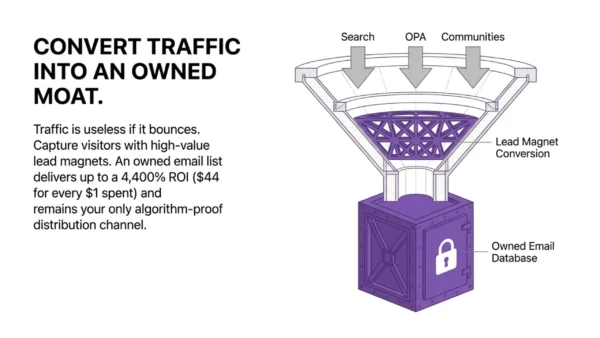
If you have no relevant subscriber list, email is not an immediate solution. Building the list is a longer-term asset that reduces dependence on changing social algorithms and rented audiences.
Repurpose the Idea for Relevant Platforms
One strong article can create several entry points, but repurposing should mean adaptation rather than copying the same caption everywhere.
Create platform-native social content
Extract one practical idea from the article and turn it into a short explanation, a visual process, a carousel, a demonstration or a concise case example. The social post should stand on its own while giving people a specific reason to visit the original resource, such as a template, evidence, implementation detail or worked example.
A post for a professional network may focus on a common business mistake. A short video may demonstrate the process. A visual post may show the decision involved. The subject remains related, but the format and opening message match the platform.
Measure these visits as Organic Social. Avoid unsupported rules about perfect posting times, hashtag quantities or placing links in comments. Treat different formats as experiments and compare qualified visits rather than reach alone.
Answer questions in relevant communities
Community participation can generate targeted referral traffic, but only when the answer is useful without the link. Begin with the question, follow the group’s rules and provide a complete explanation directly in the discussion. Mention your resource only where it adds meaningful detail, such as a downloadable template or fuller worked example.
This approach is slower than dropping links into numerous discussions, but it is more credible and less likely to be treated as spam. Google’s spam policies cover manipulative forum comments, optimised signature links and user-generated spam. Communities also tend to reject accounts that behave like link repositories.
The main measure is not the number of links posted. Look at relevant visits, engagement and subsequent actions, while also considering the time spent participating.
Create a small asset people can recommend
A distinctive asset gives promotion a concrete purpose. It might be a decision checklist, worksheet, comparison based on stated criteria, reusable briefing template, annotated process or transparent mini-study.
Original research can be especially useful because publishers and practitioners may have a reason to reference it. Orbit Media’s 2026 survey associated publishing original research with a 50% higher likelihood of respondents reporting strong results. That is a survey correlation, not evidence that research increases organic traffic by 50%.
If you conduct a small study, state how many responses you collected, how they were gathered, when the work took place and what its limitations are. Do not describe informal feedback as representative industry research.
Borrow Relevant Audiences Without Creating Link Schemes
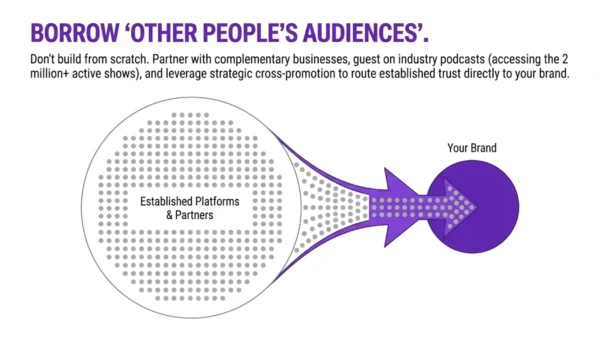
Other people’s audiences can be valuable when the relationship is based on shared expertise rather than artificial link exchanges.
Involve suitable experts before publication
Ask a small number of relevant practitioners for a specific contribution, such as a caution, contrasting opinion, technical explanation or example from experience. A genuine contribution improves the article before publication and gives the contributor a legitimate reason to know about the finished resource.
Send the completed article afterwards without demanding a share or backlink. Decorative quotations added solely to trigger promotion are unlikely to make the content stronger.
Orbit Media’s survey found that influencer collaboration was associated with 2.6 times the benchmark likelihood of respondents reporting strong results. The finding supports testing collaboration, but it does not prove that adding expert quotes causes traffic.
Pitch useful resources to editors
Target relevant publishers, industry newsletters and professional associations rather than sending mass requests for “free backlinks”. A good pitch identifies the audience’s question, explains what is original about the resource and suggests where it could fit editorially.
Original findings, practical tools, timely explanations and clearly documented examples are more useful to an editor than a generic article about a broad keyword. A successful mention may produce referral traffic and an editorial link may help discovery, but neither result is guaranteed.
Guest contributions can work for the same reason: they provide access to a relevant readership. Choose publications with real editorial standards and evidence of audience engagement. Write something that stands on its own merits, rather than selecting a host solely because of a third-party authority score or insisting on exact-match anchor text.
Build complementary partnerships
A non-competing business, trade association or specialist newsletter may serve the same audience from a different angle. A jointly produced guide, educational session, expert discussion or newsletter contribution can introduce both audiences to useful expertise.
The purpose is audience relevance and shared value. Avoid excessive reciprocal links or partner pages created mainly for cross-linking. Those arrangements can look manipulative and rarely create a durable audience relationship.
Handle syndication carefully
Sharing an excerpt, publishing an adapted contribution and republishing an entire article are different activities. Full republication should be agreed in advance, including attribution, links, permissions and how the partner page will be indexed.
Do not assume that placing the same article on several websites automatically creates authority or rankings. If syndication is important, establish an indexing plan before publication rather than trying to resolve competing versions afterwards.
Protect Search Visibility While Diversifying Promotion
Search remains useful, but visibility does not always translate into the same volume of clicks. A Pew Research Center study published in July 2025 found that users clicked a traditional search result on 8% of visits when an AI summary appeared, compared with 15% when one did not. Links within AI summaries were clicked on just 1% of visits in the study.
An Ahrefs analysis published in February 2026 also reported a 58% lower average desktop click-through rate for the top-ranking page when AI Overviews were present, compared with its estimated counterfactual. The studies used different methods and should not be treated as universal benchmarks. Their practical implication is clearer: maintain useful searchable content while developing direct relationships through email, communities, social platforms and relevant publishers.
Google says AI Overviews and AI Mode do not require a special file, new schema or separate technical optimisation. The same fundamentals remain important: clear answers, original value, credible evidence, useful internal links and a page that works properly.
Page experience is not a promotion shortcut, but it can affect what happens after someone clicks. Google’s published Core Web Vitals targets include a Largest Contentful Paint within 2.5 seconds, Interaction to Next Paint below 200 milliseconds and Cumulative Layout Shift below 0.1. Treat these as usability targets, not a formula for achieving a ranking.
Measure Distribution and Search Separately
The word “actually” requires more than impressions or social reach. Use a two-layer scorecard.
For distribution, record visits by source and medium, engaged visits, downloads, newsletter sign-ups, enquiries and the time invested in each method. Use consistent UTM tags on links you control so a particular email, social format or partnership can be identified.
For search, use Search Console to monitor impressions, clicks, queries, landing pages, click-through rates and indexing status. Use Analytics to understand behaviour and conversions after the visit. Search Console’s overall Web reporting includes appearances in Google’s AI features, but it does not present every AI interaction as a separate traffic channel.
A practical test begins with several comparable resources and a baseline period. Choose two or three relevant promotion methods, record the time required, tag the links and monitor both immediate visits and meaningful actions. Review search performance separately. If search clicks rise after promotion, report the timing and the observed change, but do not claim that promotion was the sole cause if other campaigns, seasonal effects or content changes were involved.
The strongest system is therefore not “publish and hope” or “post everywhere”. It is a cycle of useful content, relevant distribution, independent references and measurement. The best answer in the world has no value if nobody discovers it, but distribution works best when the answer is genuinely worth finding.
Research Insights
| Topic / Area | Key Finding | Business Impact | Why It Matters |
|---|---|---|---|
| Reported content results | Only 13.9% reported strong results | Differentiation and measurement matter | Publishing volume alone is unreliable |
| Original research | Associated with 50% higher strong-result likelihood | Creates citable, distinctive assets | Correlation is not proof of traffic causation |
| Expert collaboration | 2.6 times benchmark likelihood of strong results | Supports testing relevant partnerships | Only 7% reported using it |
| AI search behaviour | Traditional result clicks fell from 15% to 8% | Visibility may produce fewer visits | Direct distribution becomes more important |
| AI Overview CTR | Average desktop CTR was 58% lower in Ahrefs analysis | Rankings and visits can diverge | Search performance needs careful interpretation |
Sources
Orbit Media – Blogging Statistics
Pew Research Center – Google Users Are Less Likely to Click on Links When an AI Summary Appears
Ahrefs – AI Overviews Reduce Clicks: Update
Frequently Asked Questions
Which free promotion method should a small business try first?
Start with relevant pages you already control, such as internal links, refreshed articles and a permission-based email audience. Then test one external method that matches your customers, such as a specialist community or industry newsletter. Choosing fewer channels makes it easier to measure effort and qualified results.
How long should I test a promotion method?
Use enough time to collect meaningful visits and actions rather than judging a method from one post. Record a baseline, keep the message and audience reasonably consistent, and note seasonal effects or other campaigns. Compare qualified outcomes with the time invested, not reach alone.
What should I do if my business has no email list?
Email cannot provide immediate results without an audience. Begin by offering a genuinely useful resource, such as a worksheet or guide, through relevant website pages and conversations. Ask for permission to send further information, and avoid adding contacts without clear consent.
Can guest posts still help if links are not the main goal?
Yes. A relevant publication can introduce your expertise to a suitable audience, generate referral visits and create professional relationships. Choose publications for readership and editorial quality, then write a useful contribution that works independently rather than treating it as a vehicle for exact-match links.
Should I republish my complete article on other websites?
Only after agreeing how attribution, links and indexing will be handled. An excerpt or adapted contribution is different from full republication. Publishing identical articles across multiple websites does not automatically improve authority and may create competing versions of the content.
