
Summary
An AI integration service helps small businesses improve costly, repetitive or slow workflows by embedding AI into real business processes rather than simply adding more tools. The best approach starts with one clearly defined problem, tests a controlled solution and measures the result before expanding. Human oversight, appropriate data controls and staff responsibilities remain essential throughout, allowing businesses in Bury to adopt AI practically while keeping risk under control.
Key Takeaways
- The strongest starting points for AI are costly, repetitive, or slow workflows such as admin, enquiry follow-up, and reporting
- Giving staff access to a chatbot is not true integration; genuine integration means fitting AI into real processes, permissions, and staff responsibilities
- Scaling should only happen once a small, measured pilot has proven its value, a principle explored in detail below
- Risk is kept under control through data classification, access limits, and the UK’s established cross-sector AI principles covering safety, fairness, and accountability
- West Pro Media Services frames practical AI adoption as a structured improvement programme rather than a quick tools workshop
Small business owners across Bury are hearing a lot about AI right now, and much of it sounds like noise. Some of it promises instant transformation, and some of it reads like a warning to adopt fast or fall behind. The more useful question sits closer to home: which specific task in the business, right now, is costing the most time, money, or patience?
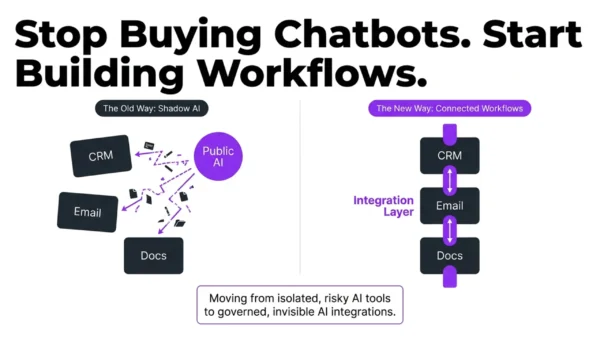
Start With Problems, Not Tools
The most common mistake in AI adoption is choosing a tool first and hunting for a use afterwards. A far stronger approach starts with the operational pain already visible in daily work: the enquiry that sat unanswered for two days, the invoice that got keyed in twice, the meeting notes nobody wrote up properly. These are the workflows worth examining before any software gets purchased.
West Pro Media Services treats AI integration as a structured business-improvement programme rather than a generic tools workshop, which matters because the difference between the two approaches often decides whether a small business sees genuine returns or ends up with another unused subscription. Framing the work this way keeps attention on outcomes rather than novelty, and it gives a Bury business owner a clear starting question: what would actually change if this task took half the time?
Grounding the process in real operational pain also protects against one of the biggest risks in AI adoption, which is spending money and staff time on something flashy that nobody in the business actually needed. A workflow-first approach forces a simple test before anything gets bought: does fixing this save hours, reduce errors, or speed up a response that customers are waiting on? If the answer is no, the tool can wait.
Spotting Your Costliest, Slowest Workflows
Every business has a handful of tasks that quietly eat up disproportionate amounts of time. Spotting them usually takes nothing more sophisticated than asking staff where their week actually goes, and comparing that against where the business wants its people spending their energy.
Repetitive Admin and First-Draft Content
Data entry, invoice processing, appointment scheduling, and drafting routine emails are classic candidates because they are frequent, low-risk, and easy to check. AI tools can produce a serviceable first draft of a proposal, a newsletter, or a set of meeting notes, leaving a person to review and refine rather than starting from a blank page. The saving is rarely in the thinking; it tends to be in the typing, the formatting, and the second pass that used to take considerably longer and now takes just a few minutes.
Enquiry Triage and Sales Follow-Up
Few things frustrate a potential customer more than silence after they have made first contact. AI-assisted lead capture and follow-up tools help small businesses turn inbound interest into booked appointments without needing a dedicated sales team, sorting enquiries by urgency and drafting a first response while a person decides on tone and detail. For a Bury trade contractor or professional-services firm, this single workflow often has the clearest link between speed of response and whether a lead becomes a booked job.
Reporting and Internal Knowledge Access
Pulling figures together for a monthly report, or hunting through old emails and shared drives for a policy document, rarely adds value in itself. AI-assisted reporting can produce a first-draft summary from structured data, which a manager then checks before using it, while a controlled internal knowledge base helps staff find approved process instructions or product specifications without interrupting a colleague. Both examples share the same shape: a slow, repeatable search-and-compile task that AI can shorten without removing the final human check.
What AI Integration Actually Means
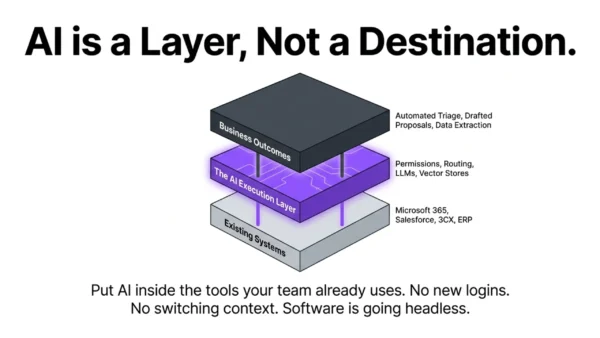
The word “integration” gets used loosely, and that looseness causes real confusion. Giving staff a login to a chatbot shows commitment to the idea of AI, but it rarely changes how the business runs on its own.
Tool Access vs True Integration
Having access to an AI tool means a licence exists somewhere in the business. Training means staff understand the basic features and know how to write a reasonable prompt. Integration means something more specific: the workflow has been redesigned, a named person owns the outcome, risk has been considered, staff have been trained for their particular role, and the result is being measured against what happened before. A business can tick the first two boxes and still see little operational improvement, because the AI output never connects to a system, a permission, or a responsibility that actually changes how work gets done.
A Governed Path From Pilot to Scale
Jumping straight to a company-wide rollout is one of the fastest ways to waste money on AI. A smaller, more deliberate path tends to produce better results and far less risk.
Introducing One Solution at a Time
Picking a single workflow, a single team, and a single approved tool keeps the first attempt manageable. A Bury accountancy practice, for example, might pilot AI-assisted meeting summaries and client follow-up drafts for one advisory team rather than rolling the idea out across the whole firm on day one. Containing the experiment this way makes it much easier to spot what is working and what needs adjusting before wider habits form around it.
Training Staff on Approved Use
A director, a receptionist, and a finance administrator handle very different data and make very different decisions, so training has to reflect that rather than offering one generic session for everyone. Staff need to know which tools are approved, which information must never be typed into them, when an output requires a second pair of eyes, and who to flag a problem to if something looks wrong. Skills fade quickly without reinforcement, so a short playbook and an internal point of contact tend to matter more than a single launch-day demonstration.
Measuring Results Before Scaling
Before the pilot even starts, it helps to note down how long the task currently takes, how often it goes wrong, and roughly what it costs in staff time. After a defined trial period, the same measurements get taken again. The comparison should look at concrete things: minutes saved on a task, how quickly enquiries get a first response, how many leads get followed up within an agreed window, and whether the quality of the output holds up to a manager’s standards. Tool usage on its own proves very little; outcomes are what justify the next step.
Keeping Risk Under Control
None of this works if sensitive information ends up somewhere it should not be, so risk management has to sit alongside the practical rollout rather than arriving as an afterthought.
Data Classification and Access Limits
Sorting information into categories such as public, internal, confidential, and personal data gives a business a quick way to decide what can go near an AI tool and what cannot. Customer records, employee details, and anything commercially sensitive should never be typed into a public AI tool without checking the provider’s terms first. Role-based access, strong passwords, and multi-factor authentication are unglamorous but genuinely effective ways of keeping that boundary intact.
UK Principles: Safety, Fairness, Accountability
The UK’s established cross-sector AI principles cover safety and robustness, transparency and explainability, fairness, accountability and governance, and contestability and redress. Small businesses can use these headings as a practical reference point even without building any AI systems themselves. In practice, that translates into keeping a human check on anything customer-facing or financially significant, being honest with customers where an AI-supported process materially affects them, and making sure someone can challenge or correct an outcome that goes wrong. None of this needs to be complicated, but it does need to be written down somewhere, even if that is a single page.
Mistakes That Derail Bury Businesses
Watching other businesses stumble is often the cheapest lesson available, so it is worth naming the mistakes that come up again and again.
Buying Tools Before Defining the Problem
Subscribing to a platform because it looked impressive in a demo, without first mapping where the real bottleneck sits, tends to produce scattered experiments and unused software. A ranked list of workflow problems, built from actual observation of how the business runs, is a far better starting point than a shortlist of trending tools.
Automating a Broken Process
Speeding up a process that was already inconsistent just means the inconsistency happens faster. If a quoting process currently produces different answers depending on who handles it, fixing the process itself has to come before any automation gets layered on top. Simplifying and standardising first, then automating, tends to produce a cleaner and more reliable result than trying to do both at once.
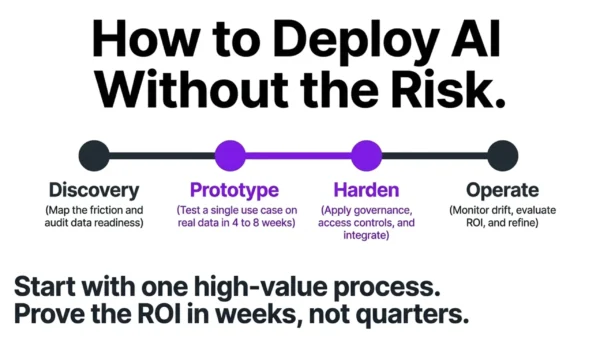
Proven Success Must Precede Scaling
The throughline across all of this is patience with evidence. A pilot that saves a measurable number of minutes per task, reduces rekeying, or speeds up enquiry response times earns the right to expand; a pilot that merely feels impressive does not. Expanding only after a clear, measured result keeps costs proportionate, keeps staff confident in the process, and keeps risk contained to a single team rather than spread across the whole business before anyone has proven the idea works.
For a practical next step, consider working through an AI integration for business assessment that starts with the workflow causing the most friction right now.
| Topic / Area | Key Finding | Business Impact | Why It Matters |
|---|---|---|---|
| UK business adoption | Around 25% of UK businesses used AI in late 2025 | AI is moving into mainstream operational planning | Delaying exploration may widen efficiency gaps |
| Small-business use | 28% of firms with 0–9 staff reported AI use | Practical use is no longer limited to large firms | Smaller teams can target manageable workflow improvements |
| Common AI application | Nearly 60% use AI to improve business processes | Admin, analysis and service workflows are priority areas | Start where repeated work creates visible friction |
| Data and governance | Accountability, transparency and risk controls remain core principles | Requires approved tools, clear ownership and human checks | Protects customers, staff and business reputation |
| Adoption approach | AI use has risen sharply since late 2023 | Pilots can establish value before wider spending | Measurement prevents unused subscriptions and poor rollouts |
Sources
Frequently Asked Questions
What is the best first AI project for a small business?
Start with one frequent, frustrating workflow that has a clear cost: slow enquiry replies, repetitive admin, meeting notes, quote preparation, or reporting. Choose a task with measurable volume and a straightforward human review step, rather than trying to automate several departments at once.
How much does AI integration cost for a small business in Bury?
The cost depends on the workflow, existing software, data sensitivity and level of automation required. A focused pilot is usually more affordable and lower-risk than a full rollout, because it tests one process first and exposes any training, setup or review costs early.
How can we tell whether an AI pilot is actually working?
Set a baseline before starting, then compare the same measures during the pilot: time per task, response speed, error or rework rates, completed workload and staff review time. Subtract software and implementation costs from the value created before deciding whether to scale.
Can staff put customer information into AI tools?
Not automatically. First identify what information is personal, confidential or commercially sensitive, check the provider’s data terms and restrict access to approved users. Customer-facing, financial or consequential outputs should have human review, particularly where an error could affect someone’s rights or treatment.
Do we need an AI policy before we start using AI?
A lengthy policy is not always necessary for a small pilot, but clear written rules are. Define which tools are approved, what data staff must not enter, who checks outputs, when human approval is required and who owns any problem or escalation. This supports accountable use.
