
Summary
A content distribution service helps businesses get useful content seen across multiple platforms instead of relying on a single website or channel. Effective distribution adapts strong original content for relevant audiences across owned, earned and paid channels, increasing opportunities for discovery through search engines, AI tools and real customers. Distribution cannot compensate for weak content, but it can significantly extend the reach and value of content worth finding.
Key Takeaways
- Effective content distribution spreads business content across owned, earned, and paid channels so it can actually be discovered rather than sitting unseen
- Publishing creates an asset while distribution creates its chance of being found by search engines, AI tools, and real audiences
- Google’s Helpful Content system, folded into core ranking since March 2024, rewards genuinely useful pages and penalises scaled, low-value content regardless of how it was produced
- Syndicating an article safely means requesting a backlink to the original and, where protecting rankings matters most, asking partners to block indexing of the syndicated copy rather than relying on a cross-domain canonical tag
- Read on to see how a coordinated distribution strategy, including tools like multicasting, can help content reach the right audience without falling foul of Google’s spam policies
Publishing an article and getting it noticed are two very different jobs, and mixing them up is one of the biggest mistakes a business can make online.
Plenty of business owners pour hours into a well-researched blog post, hit publish, and then wait for the phone to ring. It rarely does. Search engines, social platforms, and even AI chat assistants only surface a slice of what gets written each day. A brilliant guide sitting alone on a website is a bit like a shop with no sign above the door: the product might be excellent, but nobody walking past knows it exists.
This is where content distribution earns its keep. Rather than treating publication as the finish line, distribution treats it as the starting point, planning where that content should travel next, how it should be reshaped for each audience, and how its performance gets tracked. Understanding the gap between writing something good and making sure it gets seen often comes down to a deliberate multicasting approach that pushes content across several channels at once rather than leaving it to chance.
The sections below unpack what distribution really means, whether it genuinely helps with search and AI visibility, and how to avoid the traps that can quietly damage a website’s reputation with Google.
Why Publishing Alone Isn’t Enough
A finished article, video, or guide is an asset. It has value sitting on a server somewhere, ready to answer a question or solve a problem. But an asset only pays off when the right person finds it, and search engines cannot recommend a page they have never crawled, readers cannot share a post they have never seen, and journalists cannot quote research they do not know exists.
Most small and medium-sized businesses publish sporadically and hope algorithms will do the heavy lifting. Search engines reward relevance and authority, not effort alone, so a well-written piece with zero promotion often sits buried below competitors who put in the extra step of getting it in front of people. Building an audience takes repeated, visible presence across the places that audience already spends time, whether that is a trade newsletter, a local community group, or a partner’s blog.
Treating distribution as an afterthought also wastes budget. Commissioning content is rarely cheap, whether it is a case study, a video, or an in-depth guide, and letting that investment sit quietly on one page means the return never matches the effort put in. A short list summarises the practical cost of skipping distribution:
Search engines take longer to find and rank pages with few external signals pointing to them.
- Social audiences never encounter content that only lives on a company blog.
- Potential customers researching a purchase never stumble across expertise that could have answered their question.
- Competitors who actively promote similar content capture the attention and the clicks instead.
What Content Distribution Actually Means
Content distribution is the deliberate process of planning, adapting, publishing, promoting, and measuring business content across a coordinated mix of channels. It is not a single action but an ongoing system that takes one strong asset and gives it several legitimate routes to an audience.
Owned, Earned and Paid Channels
A useful way to picture distribution is through three buckets of channels. Owned channels are the ones a business fully controls, such as its website, blog, and email list. Earned channels are the ones a business does not control but can influence, including editorial media coverage, partner sites, and customer reviews. Paid channels are the ones bought outright, such as sponsored social posts or pay-per-click search adverts.
Each bucket plays a different role. Owned channels build a durable, first-party audience that does not disappear if a platform changes its algorithm overnight. Earned channels bring independent credibility, since a mention from a trusted third party often carries more weight than a brand talking about itself. Paid channels accelerate reach for content that has already proven itself worth promoting further. The strongest results tend to come from blending all three rather than leaning on just one.
Publishing vs Distribution
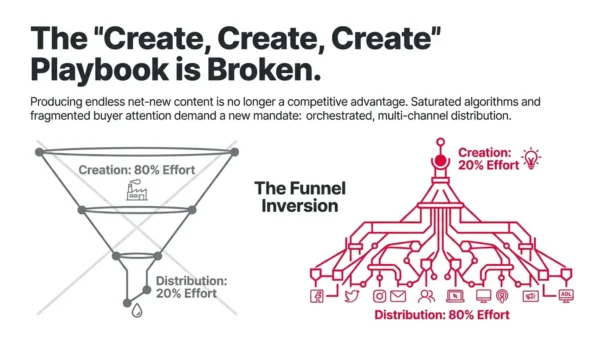
Publishing creates an asset. Distribution creates its opportunity to be discovered. That distinction matters because many businesses stop at the first step, assuming that simply having a blog or a social account is enough.
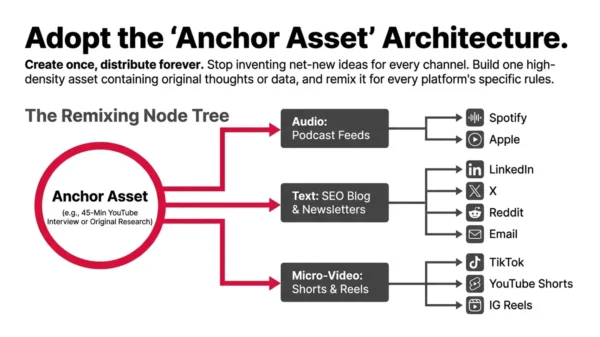
Genuine distribution involves choosing the right channels for a specific audience, changing the format so it suits each environment, keeping a clear original source so nobody gets confused about where the content lives, making sure clicks and shares can be tracked, and connecting all that activity back to real business outcomes like enquiries or sales. Copying one piece of text across ten platforms without any of that thinking amounts to duplication rather than distribution, and it rarely performs well.
Does It Really Boost Search and AI Visibility?
This is the question most business owners actually want answered, and the honest response sits somewhere between yes and it depends.
Where Distribution Can Help
Good distribution can indirectly support how a business appears in search results and AI-generated answers. When content earns genuine mentions, backlinks, branded searches, and engagement from real readers, those signals build the kind of authority that search engines and AI systems tend to favour. A guide that gets referenced by an industry newsletter, shared by a satisfied customer, or cited by a local news outlet sends a much stronger signal than one sitting alone on a website. AI-powered search tools also reward consistency and clarity, since expertise that shows up in multiple credible places is easier for an AI system to recognise and trust when deciding which source to cite.
An Ahrefs study updated in April 2026 found that only 38% of pages cited in Google AI Overviews now rank in Google’s top 10 results for the same query, down from 76% in the earlier July 2025 study. The remaining citations split almost evenly, with just over 30% coming from pages ranking 11 to 100 and a similar share coming from pages beyond the top 100. That shift suggests strong search rankings still help but no longer guarantee AI citations, and pages further down the results can still be cited when they offer clear, credible information.
What It Can’t Guarantee
None of this bypasses Google’s quality systems or promises a top ranking. Distribution widens the opportunity for content to be noticed, but it cannot force search engines to rank thin or unoriginal material simply because it has been shared widely. A weak article posted on fifty websites remains a weak article; the volume of copies adds no value that was never there to begin with. Businesses do best treating distribution as amplification for genuinely useful content, rather than a shortcut around the work of creating something worth reading in the first place.
Google’s Rules on Scaled and Low-Value Content
Understanding what Google actively discourages matters just as much as knowing what helps, because some tactics that look like efficient distribution can quietly damage a site’s standing.
The Helpful Content System
Google folded its Helpful Content system into its core ranking systems in March 2024, and the underlying message has stayed consistent since. Content should be created primarily for people, not to chase search traffic. Pages that genuinely answer a question, share real experience, or offer a clear point of view tend to perform far better over time than pages stuffed with keywords and thin on substance.
Scaled Content Abuse
Google’s spam policies specifically call out scaled content abuse, which covers producing large volumes of pages mainly to manipulate rankings. This applies regardless of how the content was made, whether that is AI-generated text, scraped feeds, or even human-written pages churned out at speed with no real value added. The method used is rarely the issue; the intent behind it and the lack of usefulness are what draw scrutiny.
Site Reputation Abuse
A related policy targets what is often called parasite SEO: publishing third-party content on a well-established site purely to borrow its ranking power, with little editorial oversight from the host. Google’s guidance is clear that any contribution hosted on a partner site should genuinely suit that site’s audience and editorial standards, rather than simply exploiting its existing authority.
Syndicating Content Without Losing Rankings
Syndication, where a full or partial article gets republished on another website, is a legitimate and often valuable distribution tactic. It can bring fresh audiences, referral traffic, and credibility. The risk lies in duplicate content confusing search engines about which version deserves to rank.
Backlinks and Blocking Indexing
Google recommends asking syndication partners to include a clear backlink to the original article, which helps search engines and readers alike understand where the content first appeared. Google’s guidance changed in May 2023: it now advises against relying on a cross-domain canonical tag to manage syndication duplication, and instead recommends that partners block indexing of the syndicated copy when a business wants to protect its original page’s visibility above all else. Publishing the complete original piece on the business website first, well ahead of any syndicated copies, gives search engines time to recognise and index the source before duplicates appear elsewhere.
Building a Distribution Strategy That Works
A strategy built on guesswork rarely lasts. The businesses that get consistent results tend to follow a few repeatable habits.
Matching Channels to Audience
The starting point is always the audience, not the platform. A local trades business might get far more value from a regional publisher, a community group, and Google Business Profile updates than from a broad national campaign. A business-to-business consultancy might find more traction through professional networking commentary, sector newsletters, and webinars. Choosing channels because an audience genuinely spends time there beats spreading effort thinly across every platform available.
Adapting Formats, Not Just Copying
Identical text rarely performs the same way twice across different environments. A long-form guide might become a short, punchy social post highlighting one surprising finding, a friendly email summary encouraging readers to click through, or a short video walking through the main takeaway. Adapting the headline, length, and level of detail for each channel keeps the message fresh and relevant rather than recycled.
Measuring Beyond Impressions
Follower counts and impressions look impressive on a report but rarely tell the full story. Useful measurement tracks things like qualified website visits, newsletter sign-ups from the right audience, enquiries, and assisted conversions where a piece of content played a supporting role in a longer purchasing process. A single enquiry from a respected trade publication can outweigh thousands of passive views from an unrelated audience.
Distribution Multiplies Reach, Quality Still Wins
Distribution gives good content the chance to travel further, reach the right people, and build the kind of credibility that search engines and AI tools notice over time. It cannot, however, turn weak or generic material into something worth ranking, sharing, or citing. Genuinely useful content, paired with a thoughtful plan for getting it seen across owned, earned, and paid channels, produces the strongest results.
Businesses weighing up where to focus first should look at what is already sitting unused on their website, since older guides, case studies, and articles often have plenty of life left in them once they are reshaped and pushed out properly. For a practical next step, West Pro Media Services can help build a content distribution strategy that turns a handful of strong articles into a steady stream of visibility across the platforms that matter most.
| Topic / Area | Key Finding | Business Impact | Why It Matters |
|---|---|---|---|
| AI Overview visibility | Only 37.9% of cited URLs rank top ten | Strong content can gain visibility beyond first-page rankings | Distribution should build credible, discoverable content across channels |
| AI citation opportunity | 31.2% of cited URLs rank positions 11–100 | Mid-ranking pages still offer AI visibility potential | Refresh and promote valuable pages, not only top performers |
| Content quality governance | Google targets scaled, low-value content regardless of production method | High-volume publishing can create ranking and reputation risk | Prioritise useful, differentiated content with editorial oversight |
| Content syndication | Google recommends partners block indexing of duplicate copies | Reduces risk of syndicated copies competing in search | Publish originals first and retain clear source ownership |
| Distribution measurement | Impressions alone do not demonstrate commercial value | Weak reporting can misdirect budgets toward vanity metrics | Track qualified traffic, enquiries, assisted conversions, and sales |
Sources
Frequently Asked Questions
How many platforms should a business use for content distribution?
Start with the few channels where your buyers already look for advice, rather than posting everywhere. For many businesses, this means their website, email list, one relevant social platform, Google Business Profile, and carefully selected industry or local publications. Expand only when results justify it.
Can content distribution help my business appear in AI search results?
It can improve the conditions for visibility, but it cannot guarantee an AI citation. Clear, original content that earns credible mentions, links, branded searches, and engagement is easier for search and AI systems to assess. Focus on expertise, accuracy, distinctive examples, and reputable third-party exposure.
Is it safe to republish the same article on another website?
Yes, if syndication is managed properly. Publish the original on your own site first, ask the partner to link clearly to it, and consider asking them to prevent their republished version from being indexed. Avoid distributing identical content indiscriminately across low-quality sites.
What content is worth distributing first?
Prioritise pages that answer genuine buying questions or demonstrate expertise: detailed service guides, case studies, original research, comparison content, useful checklists, and locally relevant advice. Start with content that already gains enquiries, rankings, engagement, or positive customer feedback, then create channel-specific versions of it.
How can I measure whether content distribution is generating business?
Track outcomes beyond impressions and follower growth. Use tagged links to identify referral traffic, then measure engaged visits, email subscriptions, key-page views, enquiry form submissions, calls, booked meetings, and assisted conversions. Compare channel quality: a handful of relevant enquiries often matters more than thousands of untargeted clicks.
